Airway work rewards the calm and punishes the casual. Whether it happens in a school gym during a cardiac arrest, the back of a snowbound ambulance, a rural emergency department at 3 a.m., or a crowded operating room after a failed first attempt, the outcome often hinges on preparation. Good equipment matters, but without deliberate practice, teams default to habit. That is where the right manikin earns its keep. Not just any plastic head on a table, but a training device chosen for the skills you actually need to master, supported by a plan that fits the Canadian realities of geography, staffing, and certification requirements.
Where the training really pays off
When I think about airway education that sticks, it is rarely about a glamorous first-pass success video. It is the quiet moment when a junior paramedic asks for a bougie before lifting the laryngoscope, because the manikin they practiced with punished blind, shallow blading. It is the rural anesthesia assistant who guards against gastric insufflation because their infant manikin lit up a warning when ventilation volumes ran high. It is the community hospital charge nurse who rehearsed calling for a surgical airway kit during a can’t intubate, can’t oxygenate drill, then recognized the same trajectory in a real patient and redirected the team early.
Those behaviours do not come from reading a manual. They come from repetitions on a simulator that gives feedback with the right level of friction, neither too forgiving nor miserly. The Canadian context adds its own wrinkles. Distances are large, weather delays are real, and clinical exposure can be uneven. Programs in the North or on the coasts may go months between complex pediatric airways, while high-volume urban sites have the opposite problem, the press of throughput. Go to the website A wise simulation setup accounts for those differences.
What separates a useful manikin from an expensive statue
Manikins range from simple torsos to full-body systems with physiologic models. For airway work, several attributes matter more than brand labels. Over the years I have learned to look past glossy demos and focus on features that change learner behaviour.
Anatomical fidelity is the first test. You want airway landmarks that force proper technique, not a short-cut airway where the epiglottis springs out of the way the moment a blade arrives. Tongue bulk that occludes until you lift the mandible, a vallecula you can actually find, teeth you can chip if you lever, and a laryngeal inlet that is not an easy bullseye. Good models create the same micro-decisions you make on real patients, such as adjusting head position, changing blade size, or committing to ramping an obese patient.
Tissue feel is harder to quantify, but you recognize it as soon as you pass a tube. Silicone blends have improved, yet some trainers still feel like intubating a tire. The better ones add graded resistance at the vocal cords and a palpable click as the cuff clears the cords. That tactile moment gives learners confidence and reduces over-advancement, which is a common early error.
Feedback and sensorization can take you from guessing to coaching. Compression sensors transformed CPR training, and airway is moving the same way. Some airway heads integrate pressure sensors across the incisors, tongue, and cricoid region. Others track ventilation volumes and peak pressures. When learners see that even modest cricoid pressure changes view quality, or that a head tilt alone halves required BVM pressure, they internalize it faster than through lecture.
Durability and maintenance count in a cold climate. A manikin that lives in a truck or an unheated storeroom needs to wake up and work in February. Seals that crack in the cold or lungs that stiffen ruin sessions and budgets. I ask vendors to show me how to change consumables with gloves on, and how long replacement parts take to arrive within Canada. If a product relies on a cloud app for metrics, I also confirm it runs offline, because Wi-Fi in a field house or a rural site can be patchy.
Finally, setup speed dictates use. If it takes twenty minutes to assemble, instructors will use it less, particularly during shift-based in situ drills. The best airway trainers go from case to table while someone is still setting up the suction and checking the video laryngoscope.
The Canadian training ecosystem and its implications
Airway skills cut across roles. Prehospital crews, respiratory therapists, nurses, emergency physicians, critical care physicians, and anesthesiologists all touch a share of airway cases. Provincial certification bodies shape the curriculum, as do national courses from Heart and Stroke, the Canadian Red Cross, and specialty colleges. Many programs pair Basic Life Support refreshers with scenario work, which means a lot of airway and CPR practice happens together. The practical takeaway is simple. Choose devices that allow seamless transitions between BLS measures, supraglottic placement, and endotracheal intubation, and that do not require a room full of AV equipment to debrief.
The supply side matters too. Medical simulation equipment Canada vendors carry a broad mix of brands, and lead times vary. Provincial health authorities sometimes centralize procurement, and smaller sites often rely on regional education teams or shared inventories. Warranty support inside Canada shortens downtime. In bilingual regions, manuals and software interfaces available in both English and French ease adoption. I have also seen sites pause deployments because hospital IT could not approve an app connection. Planning for these realities prevents training gaps.
Getting the fidelity right, not just the price
It helps to think about training needs in tiers, then match manikins accordingly. I keep returning to four buckets, each with a distinct job to do.
- Foundation for BLS and bag-mask ventilation. The goal here is seal technique, head position, and volume awareness. Prestan CPR manikins Canada often anchor this tier, with tactile clickers and visual indicators that reward correct compression depth and rate. Pairing them with a simple airway head or an add-on lung system lets you practice BVM without turning the session into an intubation race. Core airway technique, supraglottic to direct laryngoscopy. A mid-fidelity airway head with realistic tongue bulk and dentition, plus the ability to practice oropharyngeal airways, nasopharyngeal airways, and LMAs, will serve the majority of learners. You want enough resistance to make you position properly, and enough realism to highlight differences between Macintosh, Miller, and hyperangulated blades. Advanced airway and physiology under stress. High-fidelity CPR manikins and full-body simulators that model desaturation curves, bronchospasm, or airway edema move beyond mechanics to team performance. Laerdal manikins Canada, such as Resusci lines with QCPR capability or the SimMan family, are common examples in this tier, though other brands offer similar features. Here the manikin is not teaching you to pass the tube, it is teaching the room to anticipate, communicate, and recover when the first plan fails. Rare procedures and surgical access. Cricothyrotomy, retrograde intubation, and fiberoptic techniques demand task trainers built for purpose. Some systems allow modular add-ons for front-of-neck access. If that option exists, confirm that the consumables are affordable and available, and that the tissue supports multiple passes without shredding after the first attempt.
The mistake I see most often is jumping straight to high fidelity without building a base. Full-body systems shine during interprofessional drills, but they will not fix poor BVM technique. Equally, a single airway head cannot show the consequences of a delayed first pass in a hypoxic septic patient. Programs that layer tiers, even if modestly, squeeze more value from each hour of practice.
A closer look at common choices in Canada
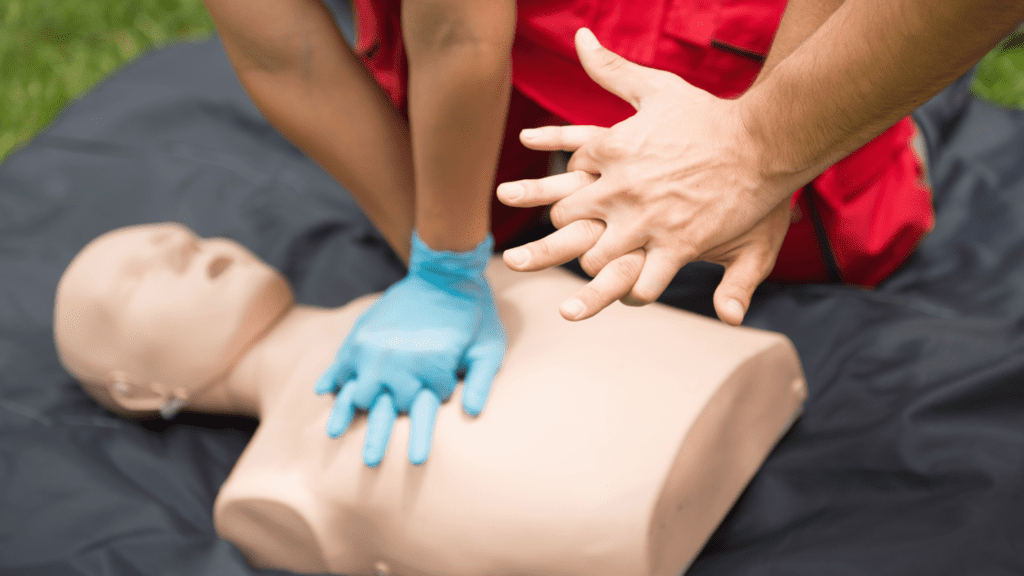
Prestan CPR manikins Canada are workhorses for BLS programs. They are light, durable, and forgiving to transport in all seasons. The visual feedback on compression rate and depth is clear across a classroom, which reduces instructor fatigue when monitoring multiple learners. While their airway passages allow head tilt, chin lift, they are not designed for advanced airways. That is a strength, not a limitation, for fundamental sessions. Learners focus on compressions, ventilation timing, and team choreography. For public courses and recertifications, the value per dollar is hard to beat. In my experience, the consumables cost and time to set up for a 20-person course stay manageable, with most wear centered on lungs and face shields.
Laerdal manikins Canada occupy a spectrum. At one end sit QCPR-capable torsos like Little Anne and Resusci Anne, which add real-time metrics for compression and ventilation. At the other end are high-fidelity systems like SimMan, ALS-capable full-body simulators with integrated airways, vital signs, and scenario control. In between live dedicated airway trainers that feel close to human tissue and let you practice direct and video laryngoscopy, supraglottics, and even fiberoptic techniques. The strength of the Laerdal ecosystem is the consistency of parts and support, along with software that allows structured debrief. The trade-off is complexity and cost. A center that runs OSCEs for dozens of learners will appreciate the analytics. A small ED that wants to train on night shift may find the setup time and technical footprint too heavy unless a regional sim team supports them.
Other brands deserve mention, particularly for specialized airway heads that emphasize particular challenges. Pediatric airway trainers with proportionally larger occiputs and floppier epiglottides force you to pad and position properly. Difficult airway modules that simulate edema or laryngospasm can make you abandon a failing plan earlier and commit to a supraglottic airway. The best of these do not just make the view harder, they allow you to practice rescue maneuvers in a graded way.
Cost ranges guide choices. Entry-level CPR torsos typically run a few hundred Canadian dollars per unit, often discounted in multi-packs. Mid-fidelity airway heads span roughly the low thousands to mid-thousands per unit, depending on sensors and materials. High-fidelity full-body simulators can stretch from tens of thousands into the low six figures when bundled with monitors, software, and service contracts. Pricing moves with exchange rates and provincial purchasing arrangements, so I recommend asking vendors for total cost of ownership including consumables and shipping within Canada. I also ask for two references from similar programs in my province.
Making fidelity work for actual skills
A common pitfall is to assume realism alone produces competence. Manikins do not teach judgement unless scenarios force it. A few patterns have helped us convert plastic realism into clinical confidence.
First, run drills at the edges of comfort. If a team only ever sees grade 1 views, they will not rehearse bougie use, external laryngeal manipulation, or blade swaps. If BVM is always easy, learners will not learn to downsize masks or reposition to improve the seal. Start with wins, then quickly progress to limited views, cervical collars, secretions, or simulated emesis, and quantify what each change did to time to ventilation and saturation drops.
Second, train the room, not just the intubator. Assign roles explicitly, then rotate them. The person managing the bag should call out chest rise and rate. The team lead should call a mental checklist, including preoxygenation targets and backup plans. If your manikin tracks desaturation, display it where the team can see it. The moment saturation dips into the eighties, force a decision. Back out and reoxygenate, or commit to the backup plan.
Third, bring your own equipment, including the glitches. If your ED uses one brand of video laryngoscope and your EMS service uses another, run both. If your bougies tend to stick in cold weather, simulate that friction. If the suction device in your setting tends to clog with thick secretions, add simulated mucus and make someone troubleshoot in real time. Fancy manikins are powerless against unfamiliar tools.
Finally, debrief with numbers, not vibes. How long from preoxygenation to first ventilation? How many seconds of apnea did you accept? What was the first-pass success rate across the last ten drills? Even a basic stopwatch and paper log will move your program forward faster than memory. High-fidelity systems will give you richer data for compressions and ventilations, but the habit of tracking matters more than the tool.
Maintenance, infection control, and logistics that matter north of the 49th
I have watched brilliant simulation plans grind to a halt over simple logistics. A few lessons learned the hard way have saved hours.
Keep a consumables kit with each manikin. Include spare lungs, O-rings, face skins if your model uses them, lubrication packets approved by the manufacturer, and a laminated quick-start card. The person who unlocks the closet at 6 a.m. Should not have to hunt across the building for a missing connector.
Respect cold. Plastic stiffens and seals shrink in winter. If your manikins spend time in a vehicle, let them acclimate before high-stress sessions. For silicone airway tissues, a quick warm water bath, following the manufacturer’s cleaning guidance, often restores realistic feel. Never use alcohol on parts that the manual says to clean with soap and water, because it accelerates cracking.
Plan a cleaning protocol that matches your setting. In the aftermath of respiratory virus surges, many sites tightened disinfection standards. Check that your disinfectants are approved for the materials in your device. Some wipes degrade rubber over time. Ask vendors for updated guidance, especially for products widely used in Canada.
Test your software and connectivity in the actual training environment. High-fidelity CPR manikins and QCPR apps rely on Bluetooth or Wi-Fi. Hospital networks may block peer-to-peer connections by default. If you cannot get IT to whitelist the app, bring a dedicated tablet and a stand-alone router not connected to the hospital network, and document the setup so instructors can replicate it.
Lastly, arrange for regional service support. Laerdal manikins Canada and other major brands usually have authorized service partners. A twice-yearly check prevents avoidable session cancellations. In remote areas, stock a small cache of high-wear parts.
Choosing wisely for your program’s goals
Buying a manikin solves nothing by itself. The match between device and curriculum is what changes practice. A few questions help filter the options down to what you truly need.
- Which competencies must our learners demonstrate in the next 12 months, and which can wait? Tie purchases to near-term objectives so devices see regular use. How often will we train, and with how many instructors? If sessions are frequent and instructor time is tight, prioritize quick-start devices over complex systems that require a technician. What data will we track, and who will review it? If no one has time to analyze detailed QCPR metrics, a simpler feedback model may serve you better. Where will we train? If most sessions are in situ on night shifts, portable airway heads and torsos travel better than cart-based simulators. What is our replacement and consumables plan? Build the recurring costs into your budget from day one so you are not rationing lungs and face shields a year later.
Keep that list short and honest. I have sat through many demos where shiny features tempted the room, only for us to admit later that we did not have the staff or time to exploit them.
Evidence, judgement, and the “how much is enough” question
Simulation’s effect on patient outcomes is nuanced. High-quality studies consistently show improved process metrics, like first-pass success, time to ventilation, and adherence to checklists, when teams train on realistic manikins with structured feedback. Translation to hard outcomes such as mortality is harder to prove, partly because airway cases and teams vary. My judgment, shared by many educators, is that well-built programs that use data to improve over time pay off, especially in settings with low case frequency or high staff turnover.
What about the common squeeze, when budget keeps you choosing between one high-end device or several mid-tier trainers? For most mixed programs, distributing practice opportunities beats concentrating technology in a single room. A handful of reliable mid-fidelity airway heads plus QCPR torsos can train hundreds of learners and establish a baseline culture of competence. Add a sessional block with a high-fidelity simulator, perhaps through a regional center, to target team decision-making and crisis resource management. This layered approach fits many Canadian institutions where travel and scheduling complicate access to centralized facilities.
A practical Canadian case mix, translated into manikin choices
Consider three typical scenarios.
A paramedic service in Atlantic Canada wants to reduce failed supraglottic insertions during transport. Their after-action reviews show that mask ventilation often improves when the patient is re-positioned, but device placement remains variable. Here, adding a mid-fidelity airway head with realistic tongue resistance, paired with the same supraglottic devices used in the field, will do more than a full-body simulator. Instructors can run 15-minute drills during shift changes, emphasizing position, lubrication, and insertion depth, with manikin feedback on seal quality.
A rural emergency department in the Prairies sees few pediatric cases, and staff turn over annually. They cannot support a high-fidelity simulator on site. Investing in a pediatric airway trainer with proportionally correct anatomy, plus a QCPR-capable infant torso, allows frequent short drills in the resuscitation bay. They can supplement twice a year with a visiting regional simulation team that brings a full-body system for interprofessional drills focusing on triage, escalation, and transfer logistics.
An urban academic center in Ontario wants to tighten first-pass success during rapid sequence intubations. The team already uses video laryngoscopy, but performance varies by operator. Dedicated sessions on a sensorized airway head, with deliberate practice on bougie-first intubation, external laryngeal manipulation, and positioning, will shave seconds and Medical simulation equipment Canada increase success. Periodic high-fidelity simulations with desaturation models push team behaviors such as preoxygenation to targets, role clarity, and earlier pivot to rescue devices when time runs out. Laerdal manikins Canada or equivalents fit this environment, where data-rich debriefs and equipment integration pay off.
Final thoughts from the skills lane
Airway is not a single skill, it is a choreography. Choosing the right manikin is a commitment to practicing that dance under the pressures that matter. It means pairing the reality you need with the simplicity that keeps instructors reaching for the device week after week. For many Canadian programs, that balance looks like this. Use Prestan CPR manikins Canada or similar for high-frequency fundamentals. Add airway training manikins Canada that demand correct technique for supraglottics and laryngoscopy. Borrow or buy access to high-fidelity CPR manikins or full-body systems when you want to test team decisions, physiology under stress, and communication.
Buy intentionally, maintain obsessively, track outcomes humbly, and keep lessons close to the bedside or the curbside. The right plastic, used the right way, will change what your teams do when the room gets quiet and all that matters is a view, a tube, and the first breath that follows.