Emergency training moves quickly. Standards evolve, equipment cycles out, and learners expect tools that reflect what they see in the field. If your organization teaches CPR or first aid in Canada, smart CPR training manikins are not a luxury anymore, they are a way to keep your program relevant, reliable, and defensible. The best models do more than light up when compressions land. They record performance, support remote coaching, integrate with AED trainers, and help instructors run consistent, high quality classes across teams and regions.
I have trained instructors in community centers in Surrey, on oil sands sites outside Fort McMurray, and in high school gyms in Rimouski. The dynamics change with the venue and the audience, but the core problem stays the same. You need to make a roomful of people practice high stakes skills correctly, at pace, and leave with measurable competence. Smart manikins, tied to the right AED training equipment and supporting gear, make that job easier. They also reduce risk by capturing evidence of what people actually did in class.
What “smart” should mean for CPR training manikins
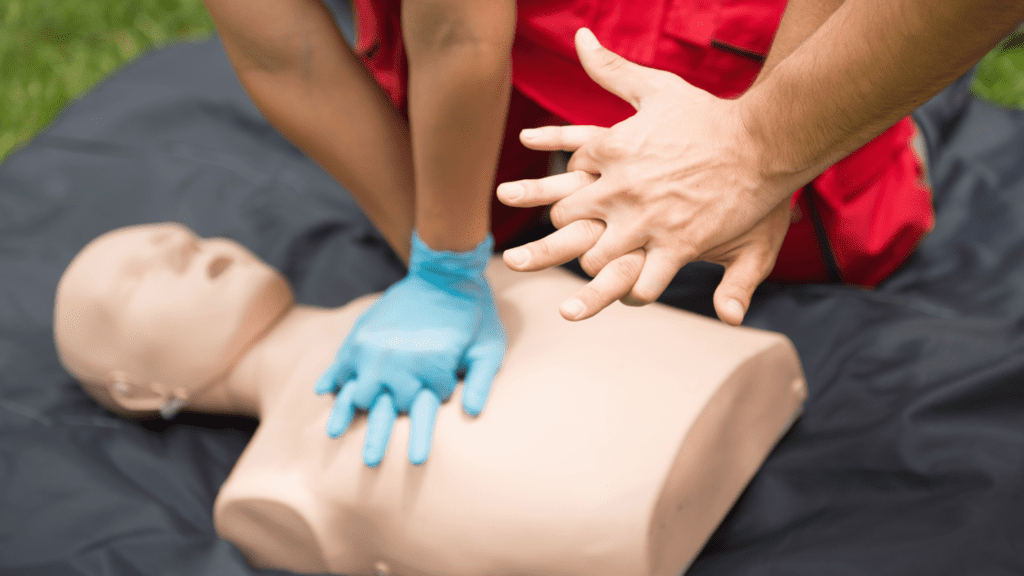
The term gets used loosely. In practice, a smart CPR manikin pairs mechanical realism with sensors and software that give actionable feedback. On the hardware side, you want depth and recoil sensors for compressions, flow measurement for ventilations, and thoracic compliance that matches adult, child, or infant bodies. On the software side, look for Bluetooth connectivity, a clean app interface that runs on common tablets and phones, multi-learner tracking, and exportable session reports.
Real time feedback matters. When learners see a bar turn green at 5 to 6 centimeters of depth, or a metronome holds them near 100 to 120 compressions per minute, they self-correct faster. In classes where we added live feedback to the same instructor and content, average time to consistent, guideline-compliant compressions dropped from about 12 minutes to 6 or 7. The effect is most obvious with new learners, but even veteran firefighters clean up bad habits when the data stares back at them.
Durability deserves as much attention as features. Training days are rough on gear, especially when you run back-to-back classes. Ribs split, torsos crack, and face skins get damaged from repeated disinfecting. The most reliable manikins I have seen in heavy use survive 5,000 to 10,000 compressions between maintenance cycles and keep their calibration over hundreds of hours. Consumables, like lungs and filters, should be quick to swap. If you need a hex driver and 20 minutes to change a lung bag, you will skip it when you are pressed for time, and infection control suffers.
The Canadian context you cannot ignore
Programs operating in Canada weave through a few practical constraints. First, bilingual delivery. If your app interface and student feedback only present in English, you will fight friction in Quebec and in bilingual federal settings. Several leading platforms include French toggles and printable reports in both languages. Validate this before you buy.
Second, standards and pathway alignment. Most courses follow Canadian Red Cross or Heart and Stroke Foundation of Canada guidelines, which mirror ILCOR recommendations with timing offsets after each update cycle. Make sure your devices reflect the current compression depth and rate targets, ventilation volumes, and AED pad placement prompts used in your curriculum. It sounds obvious, but I have seen software that still referenced 2015 timing long after updates. Also confirm that manikins and AED trainers meet or exceed relevant CSA electrical safety marks if they use powered components.
Third, geography and logistics. If you teach in Whitehorse one week and Windsor the next, shipping cases that survive airline abuse, hold calibration through temperature swings, and charge fast in hotel rooms matter more than one extra display mode. In northern communities, internet service can be intermittent. Smart manikins that cache data locally and sync later will save your day. Battery life is not a spec to gloss over. Target 6 to 8 hours on a full charge so you can run a full-day course without hunting plugs.
Finally, procurement and support. In Canada, the difference between a smooth rollout and a stalled purchase often comes down to local distribution. Look for Canadian suppliers who stock parts, honor warranties in-country, and offer loaner units when something fails. Program leads at colleges and municipal services consistently report faster turnaround when the distributor is in-province.
Where AED training equipment fits
Smart manikins shine when paired with realistic AED training equipment. If your team practices compressions on a data-rich platform but slaps pads on a generic plastic torso with no feedback, you leave learning on the table. Use AED trainers that simulate voice prompts from the major defibrillator brands found in Canadian workplaces and public spaces. The main point is muscle memory. Learners should recognize menu layouts, shock buttons, pad connectors, and automated prompts that mirror what they will meet at a mall kiosk or in the back of a security truck.
The workflow integration matters. Many manikins support pad placement sensors that confirm correct sternal and apical positioning. When combined with an AED trainer, you can measure no-flow time between last compression and defibrillation. Cutting that pause by even 3 to 4 seconds improves outcomes in the field. I have watched students shave their pause from around 18 seconds to closer to 12 on the second run just by seeing it quantified on the app.
Make sure the AED trainers are compliant with Canadian voltage and plug types, and that replacement pads and batteries are easy to source domestically. Avoid trainers that lock you into proprietary pads with long backorders. In busy seasons, backorders happen. A backup set of generic-compatible training pads can rescue a course.
Choosing a system that will still work five years from now
Smart equipment can age poorly when software stagnates or accessories disappear. Plan beyond this semester. The right vendor roadmap and spare parts policy keeps you from rebuilding your inventory after the next guideline update.
Here is a tight checklist I use with program directors when comparing options.
- Confirm app support for iOS and Android, plus a desktop export path for records. Verify bilingual interface and documentation, including printable learner reports in English and French. Ask for a written parts availability window, ideally 5 years, and a loaner policy for warranty repairs. Check that ventilation sensors are calibrated for both bag-valve-mask and mouth-to-mouth training, not just one mode. Test session export formats, like CSV or PDF, to ensure your LMS or records system ingests them cleanly.
That last point often gets missed. If you aim to document performance for large groups, workable exports are crucial. A fire department training captain in Manitoba told me he saved hours per week once his team could batch upload results from 60 learners into their training management system. Before that, they typed pass/fail notes by hand.
Data, privacy, and the audit trail
Smart manikins bring data. That is an asset and a responsibility. Decide early how you plan to store, retain, and delete learner performance records. If your program operates under provincial privacy laws or PIPEDA, confirm the vendor’s data residency and retention controls. Some platforms allow you to run offline or keep data on your device without cloud sync. Others default to cloud storage in the United States or Europe. Neither is inherently wrong, but you should choose with intent and document your rationale.
From a risk perspective, the data helps. If an incident occurs at a client site months after training, you can show what was taught and that each learner reached objective thresholds for compression rate, depth, and recoil. Insurers and safety committees appreciate these artifacts. Keep them organized. Store at least the session summary and anonymized performance distributions when you do not need named results. If you teach minors in schools, avoid collecting personal identifiers unless the district requires it.
Instructor workflow that scales
The best CPR instructor packages in Canada pull the kit together with practical details: sturdy carry cases, fast chargers for multiple manikins, spare face skins and lungs, AED trainers matched to your client’s sector, disinfectant that will not degrade the plastic, and bilingual signage. They also think about the dull parts that affect your day. For example, color coded learners in the app help you coach four or six students at once from across a gym floor. A large session dashboard on a tablet makes it easier to see who needs to push deeper without walking over and peering at a small light strip.
During a corporate course for 24 employees in Calgary, we ran six stations, each with one smart adult manikin and one AED trainer. An instructor floated between stations, watching a tablet that displayed compression depth and rate for all six devices. When one learner hovered at 4 centimeters, the instructor leaned in for 20 seconds, cued stronger recoil, then stepped away. The rest of the group kept moving. We finished the skills circuit 25 minutes earlier than the previous year, with higher pass rates on the first attempt.
Medical simulation equipment CanadaThe role of CPR and first aid training kits
CPR manikins and AED trainers are the core. Still, a high performing program depends on the supporting gear that speeds setup and cleanup. Well designed CPR and first aid training kits keep lungs, filters, face shields, nitrile gloves, alcohol wipes, and barrier devices in a single case. In community classes with rotating volunteers, I rely on pre-labeled zip pouches by learner group. At the start of class, each group grabs one. At the end, used consumables go into a lined bin, and the case is restocked from a master supply tote.
Kits that mirror the contents of Canadian workplace first aid kits help with transfer. Learners should practice with triangular bandages, roller gauze, and splints like the ones that sit on their shop floor. For remote and industrial settings, add simulated epinephrine trainers, thermal blankets, and oxygen training regulators when scope allows. These extras are not fluff. They help instructors stage realistic scenarios without hunting through a random assortment of supplies.
Budgets, pricing, and where to spend
Smart manikins cost more than basic foam torsos. In Canada, a high quality adult smart manikin typically lands between CAD 700 and 1,800 per unit depending on features and bundles. Infant and child models cost slightly less. AED training equipment ranges from CAD 250 for simple trainers to CAD 800 for brand specific replicas with advanced scenarios. Instructor packages that include two to four manikins, an AED trainer, and accessories often sit around CAD 2,500 to 5,000.
Where do you get the best return per dollar? If your classes are large and frequent, prioritize adult manikins with reliable real time feedback, long battery life, and easy sanitizing. Add a couple of infant units if pediatric CPR is in scope, and at least one AED trainer per two manikins. If your program serves bilingual or federal clients, pay for the bilingual software and documentation. It avoids awkward workarounds and makes your reports usable without translation. For small community programs with tight budgets, consider mixing a pair of smart manikins with a few non-smart bodies so that every learner still rotates through a feedback station.
Do not forget shipping, storage cases, and spare parts. Budget 10 to 15 percent for consumables and replacements in the first year. After that, a steady state of 5 to 8 percent is common unless your usage is extreme.
Maintenance, infection control, and longevity
Smart does not excuse sloppy maintenance. Align your cleaning protocol with the manufacturer’s instructions and your organization’s infection control policy. I prefer hard face skins that wipe down cleanly with hospital grade disinfectant and accept disposable barriers without slipping. If you teach mouth-to-mouth, use lungs and one-way valves rated for training, not clinical use, and change them at set intervals. Track the number of learners per set of lungs, and change them before they degrade and affect ventilation feedback.
Calibrate sensors as recommended. Compression depth readings drift over time, especially after travel in cargo holds where temperature swings are large. Build a calibration check into your setup routine. It takes two minutes and keeps your reports honest.
Rib springs, chest plates, and electronics modules should be field replaceable with basic tools. Ask your vendor to show you how, live or on video. If they cannot, expect longer downtime when something fails. A good program keeps a small stock of high wear parts and a written maintenance log. When an instructor notes that chest recoil feels sticky or the app shows erratic depth readings, you want an easy path to fix it before the next class.
Running multi-location programs across Canada
National training providers and franchises face the extra layer of standardization. You need courses in Halifax to feel the same as courses in Kelowna. Smart gear helps, but only if the instructors use it consistently. Document your expectations. Standardize firmware versions and app settings. Require the same compression depth thresholds, feedback tones, and report formats across teams. Share session templates so an instructor in Saskatoon uses the same two-minute cycles and practice-to-assessment ratio as someone in Mississauga.
Connectivity is the wildcard. In some rooms you will have reliable Wi-Fi and power bars everywhere. In others you will juggle a single outlet and a patchy LTE signal. For that reason, I recommend choosing manikins and AED trainers that operate fully offline once paired. Download updates before you travel, and carry a compact power strip. If you store session data locally for a day, ensure your devices use passcodes and that instructors know how to sync and erase records later. It prevents data drifts and surprises during audits.
Future features worth watching, without buying hype
The smart training space adds features every year. Some stick, some fade. A few developments I think will matter for Canadian programs over the next three to five years:
- Multi-device, multi-room dashboards that let a lead instructor monitor simultaneous classes at a conference or in a large facility. Expanded pediatric ventilation analytics that coach gentle, low-volume breaths and highlight over-ventilation risks clearly. Automated no-flow analysis that flags the biggest time sinks between compressions and shocks or ventilations, then suggests specific fixes. Open data standards so performance results can flow into common learning management systems without custom exports. Ruggedized, airline-ready cases with integrated charging that meet Canadian air travel rules, so your kits arrive charged and ready.
Notice what is not on the list. Gimmicks that look flashy but do not change how learners move their hands or manage time in a resuscitation attempt rarely earn their keep. If a feature does not help you coach rate, depth, recoil, hand placement, ventilation https://www.facebook.com/people/CPR-Depot-Inc/61575911496200/ quality, pad placement, or no-flow time, it probably will not improve your outcomes.
Buying in Canada, and the value of local partners
Sourcing CPR training manikins in Canada and the broader set of emergency training equipment in Canada is easier now than it was a decade ago. You can find national distributors with stock in major cities and smaller regional firms that know local needs. Local partners earn their margin when they help match AED training equipment to the brands in your client’s buildings, guide you on bilingual materials, and handle warranty issues without shipping gear across a border.
When comparing quotes, look beyond unit prices. Ask about shipping times within your province, loaners during repairs, firmware update policies, and bilingual support. If you plan to grow a program, clarify volume pricing for future orders and whether they offer CPR instructor packages in Canada that you can standardize across franchises or departments. Bundles sometimes hide weaker components. Request to swap parts to match your curriculum. For example, trade an extra adult torso for an infant unit if your client base includes childcare providers.
A practical path to implement smart training
If you are moving from traditional torsos to a smart ecosystem, pace yourself. You do not have to flip the entire program at once. Start with a focused pilot that proves value and builds instructor buy-in. Here is a simple rollout that has worked for several programs.
- Equip one or two course sites with a set of smart manikins, paired AED trainers, and CPR and first aid training kits. Train a small cadre of instructors deeply. Run three to five courses and collect performance data and feedback from learners and instructors. Track setup time, pass rates, and cleanup. Adjust protocols based on real issues, like battery life, app glitches, or session timing. Document the revised standard. Present results and a scaled budget to leadership, including reduced remediation time, better documentation, and instructor testimonials. Expand in phases, swapping out older torsos as they age. Maintain compatibility between new and legacy gear during the transition.
This phased approach prevents disruption, surfaces hidden costs, and builds champions who will help train the rest of the team. It also guards against buyer’s remorse if a platform does not fit your reality.
Edge cases that deserve forethought
Not every scenario fits the default plan. Be ready for a few outliers. In correctional facilities or secure sites, outside devices might be prohibited from connecting via Bluetooth. Choose manikins with onboard displays for those cases. In some Indigenous community courses, elders prefer limited technology in the room. Respect that preference. Use the smart features to prepare instructors, then run the course in a low tech mode, perhaps with post-session data entry rather than live dashboards. For very young learners, large, bright feedback displays can distract more than they teach. Turn off advanced visuals and coach with simple cues.
Power outages and tight quarters create their own headaches. Keep a couple of non-powered torsos as true fallbacks. They are cheap insurance. Carry extension cords rated for cold weather if you train in garages or outdoor spaces during winter months. For COVID-era or flu season concerns, stock extra lungs, barriers, and disinfectants, and plan for longer turnover between stations.
Measuring success beyond pass rates
Smart equipment makes it easy to print pass/fail sheets. Do that, but do not stop there. Track average compression depth, rate, and recoil percentages over time across cohorts. Watch how no-flow intervals change as instructors gain experience with the new system. If you teach the same client annually, compare their year-over-year numbers. Share those trends with the client’s safety committee. It turns a training line item into a performance story.
Also capture instructor workload data. Several teams I worked with reported that smart feedback reduced the time they spent individually correcting learners by half. That freed them to run more scenarios or add a brief debrief at the end of class, both of which improved retention. When budgets tighten, those operational gains help you defend the investment.
The payoff
Future proofing is not about the newest gadget. It is about making sure your program can adapt to changes in guidelines, learner expectations, and operational realities without a painful rebuild each time. Smart CPR training manikins in Canada, paired with compatible AED training equipment and thoughtful CPR and first aid training kits, give you that flexibility. They add measurable performance, bilingual support, and scalable workflows. When something fails, you can fix it. When standards shift, you can update software. When a client asks what their people learned, you can show them, not just tell them.
Most of all, students leave with a feel for good compressions that sticks. That muscle memory is why you do this work. The technology just helps you deliver it more reliably, class after class, across a country where the terrain and the needs change with every flight and every drive.